Singing Bowls for Sound Bath: Which Ones to Buy and How Many You Need


A sound bath is a meditation session built entirely around the sound of singing bowls — you lie down, close your eyes, and let the tones wash over you rather than actively meditating in the usual sense. I remember staring at a wall of singing bowls in a shop in Kathmandu, completely overwhelmed, with no idea what separated a $20 bowl from a $300 one, or which ones were actually right for running a sound bath properly.
Here’s what I’d tell you if we were standing in that shop together — whether you’re hosting a sound bath, attending one regularly and want your own bowl, or just want to understand what one actually is.

Quick Comparison: Best Singing Bowls for Beginners
| Bowl | Price | Best For |
|---|---|---|
| Silent Mind Tibetan Singing Bowl Set | $24.95 | Best beginner / budget pick |
| Ohm Store Tibetan Singing Bowl Set | $56.95 | Best mid-range / authentic handcrafted |
| Himalayan Bazaar 9″ Master Healing Singing Bowl | $369.00 | Best premium / professional grade |
Understanding singing bowls is the first step to choosing the right one. Singing bowls are ancient instruments that produce sound and vibration when played with a mallet or striker. They are often used for meditation, relaxation, and healing purposes. Singing bowls come in different sizes, shapes, and materials, each producing a unique sound and vibration.
When choosing a singing bowl, it’s important to consider your needs and preferences. Do you want a singing bowl for meditation or healing purposes? Do you prefer a certain type of sound or vibration? Taking the time to research and try out different singing bowls can help you find the one that’s right for you.
Key Takeaways
- Understanding singing bowls is the first step to choosing the right one.
- Consider your needs and preferences when choosing a singing bowl.
- Research and try out different singing bowls to find the one that’s right for you.
Table of Contents
What Is a Sound Bath, Exactly?
A sound bath is a guided session where you lie down — usually on a yoga mat or cushion, sometimes a massage table — and the practitioner plays singing bowls around or near you for anywhere from 30 minutes to an hour. You’re not actively doing anything. No chanting, no specific breathing pattern to follow. You just lie there and let the sound move through you, which is part of why people who find traditional seated meditation difficult often take to sound baths much more easily.
Tibetan metal bowls and crystal bowls are both used for this, sometimes together in the same session. Tibetan bowls tend to provide the lower, warmer foundation tones, while crystal bowls cut through with a higher, clearer sound — practitioners running proper sound baths often build a setup that uses both for that contrast.
If you’re planning to host a sound bath rather than just attend one, you don’t need a huge collection to start. A handful of bowls in different sizes, played slowly and with long pauses between sounds, does more than a large set played quickly. Quality and intention matter more than quantity here.
Understanding Singing Bowls
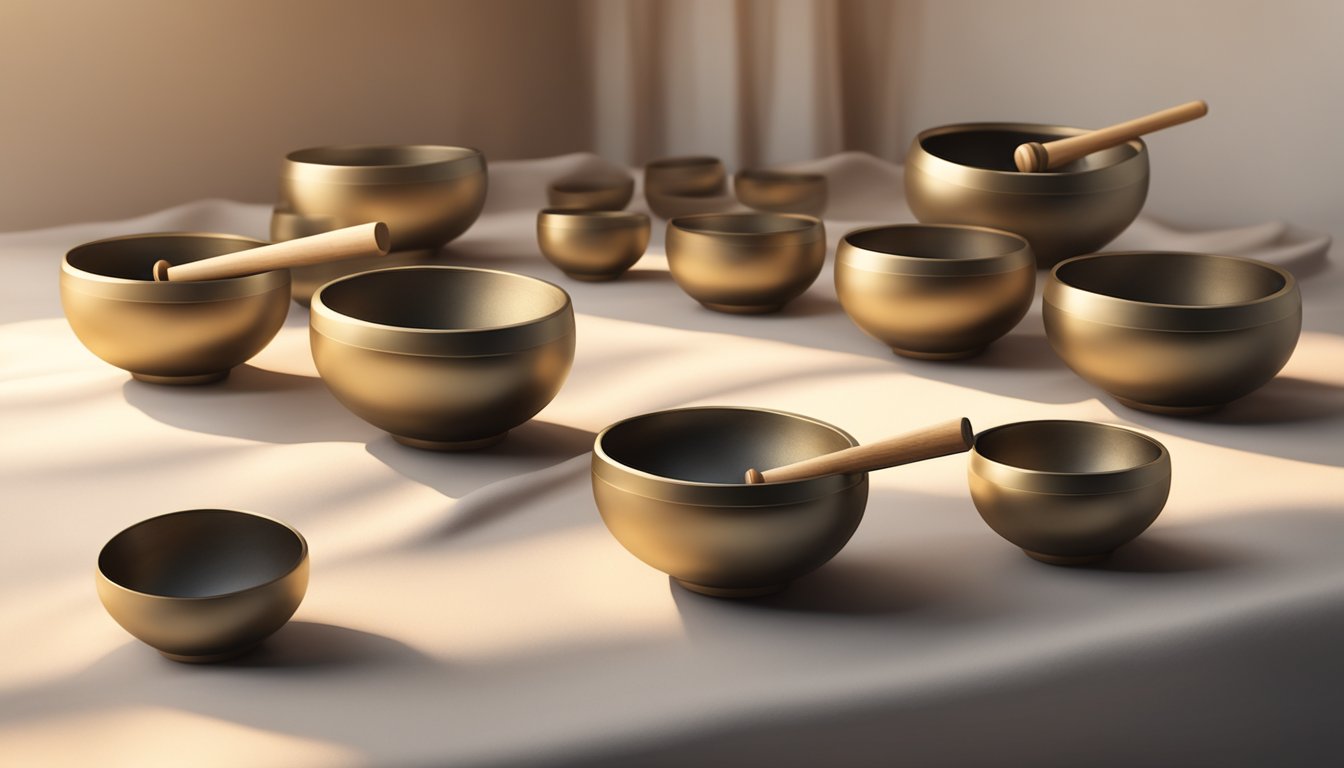
A singing bowl is exactly what it sounds like — a metal bowl that “sings” when you run a mallet around its rim, or strike it gently. People often connect them to Buddhism, and historically that’s fair, but you don’t need to be Buddhist or even spiritual in any formal sense to get something out of one.
What I notice most with clients is the physical effect before the spiritual one. The sound genuinely slows your breathing down. Whether you call that “vibrational healing” or just “a really effective relaxation tool” is up to you — either way, it works.
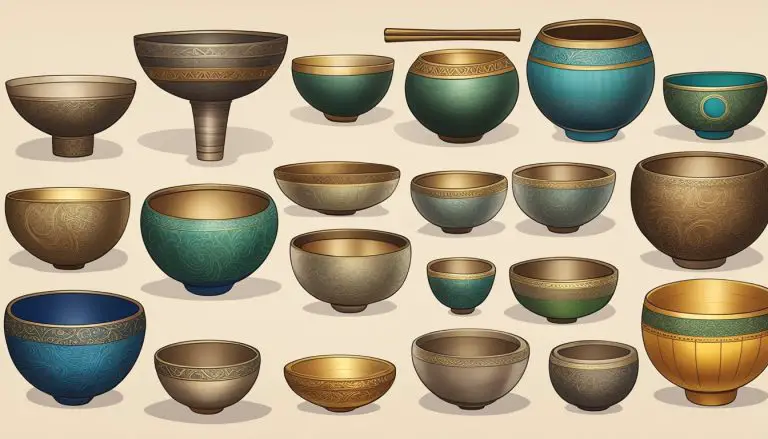
You’ll come across three main types: Tibetan bowls (metal, usually a blend of several alloys), crystal bowls (quartz, much higher pitched), and what get marketed as “Himalayan” bowls, which is really just a regional label rather than a distinct type. For a first bowl, I’d steer you towards a Tibetan metal bowl every time — they’re more forgiving to play and the sound is warmer.
That said, crystal bowls are genuinely worth exploring too — they have a higher, clearer tone that sustains longer, and many practitioners use them specifically for chakra work. If that sounds like what you’re after rather than a beginner-friendly metal bowl, I’ve put together a separate guide: Best Crystal Singing Bowls.
The tone you get depends entirely on the bowl’s size, shape, and the metal it’s made from. Bigger bowls go lower and resonate longer. Smaller ones are brighter and quicker to fade. Neither is “better” — it depends what you’re using it for, which is what the rest of this guide is about.
Choosing the Right Singing Bowl
Size is the first thing I’d ask you about. For a beginner, stick to something between 4.5 and 6 inches across. It’s easy to handle, easy to get a clean sound from on your first try, and you won’t feel like you’re wrestling with it. The trade-off is that smaller bowls don’t resonate for as long — but that’s a fine trade for someone just learning.
Quality matters more than people expect. A genuinely well-made bowl, hand-hammered rather than machine-pressed, costs more but the difference in sound is obvious the moment you hear it side by side. I’d rather you buy one good bowl than three mediocre ones.
On antiques — I’d actually steer you away from these as a first purchase. They’re beautiful and have real history, but quality varies wildly and it’s easy to overpay for something that doesn’t even sound particularly good. Save the antique hunting for once you know what you’re listening for.
Bronze is the standard for a reason — it’s the alloy most traditional bowls are made from, and it produces that warm, rounded tone people associate with singing bowls. Silver and crystal bowls exist too, both brighter and more expensive, but I wouldn’t start there.
Weight is a decent shortcut for sound: heavier bowls go deeper, lighter ones sit higher in pitch. Beyond that, appearance is genuinely just personal taste — pick one that you’ll actually want to look at and pick up every day, because that matters more for building a habit than people give it credit for.
How to Use Singing Bowls
This is easier than it looks, I promise. Here’s the routine I’d talk a complete beginner through:
- Find somewhere quiet. You don’t need a dedicated room, just somewhere you won’t be interrupted for a few minutes.
- Set the bowl on a cushion. A wobbly bowl on a hard surface won’t resonate properly and you’ll lose half the sound.
- Match your mallet to your bowl. Bigger bowl, bigger mallet. It sounds obvious but it’s the most common mistake I see beginners make.
- Strike the rim gently first. You’re not hitting a drum. A soft strike on the rim is all you need to start the sound.
- Then circle the rim with the striker. Once the initial tone is going, gently run the striker around the rim in a steady circular motion to sustain it.
- Just listen. Let the sound fill the space rather than rushing to do anything else with it.
Don’t worry about getting it “right” the first few times. Every bowl responds slightly differently, and the only way to learn yours is to spend time with it.
Singing Bowls and Chakra Healing
Chakras are the energy centres in the body, and when I work with clients, balancing them is often part of why a singing bowl ends up in the session at all.
Each chakra is associated with a particular frequency, and a singing bowl can be used to target that frequency directly. The root chakra responds to the note C, for example, while the crown chakra sits closer to B. You don’t need to memorise this — it’s more useful to know it exists than to get precise about it.
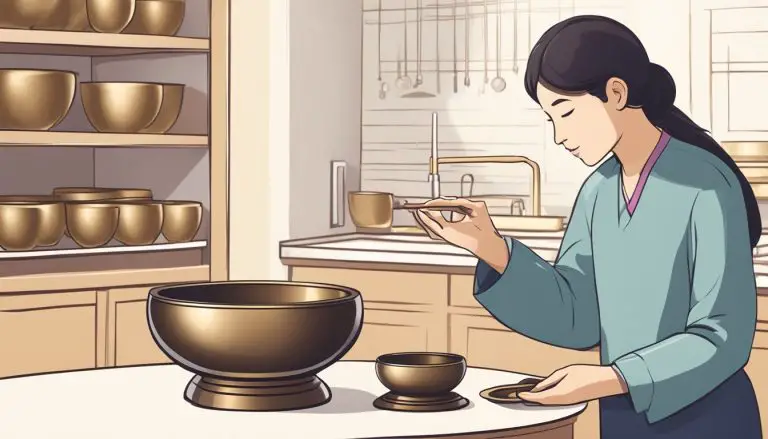
In practice, I rest the bowl in the palm of one hand, strike it gently with the mallet in the other, then move the mallet in a slow circle around the rim. Keep the pressure even and just listen as the tone builds — it gets clearer and louder the longer you stay with it.
Handmade bowls tend to produce a richer, more layered sound than mass-produced ones, which is part of why I’d always recommend spending a bit more if you can. Some bowls are even tuned to a specific chakra rather than being general-purpose — worth knowing if you’re buying with a particular intention in mind.
You’ll find singing bowls in formal Buddhist ritual as much as in a casual yoga class — the use has spread well beyond its origins, and that’s fine. Use it however genuinely helps you settle and focus.
Buying Guide for Beginners
If you take nothing else from this guide, here’s the short version of what I’d actually weigh up before buying:
Size
4.5 to 6 inches for a first bowl. Easier to handle, easier to get a clean sound, and you’ll actually enjoy practising with it rather than fighting it.
Material
Bronze or brass for your first one. They’re the traditional choice and produce that warm sound most people picture when they think of a singing bowl. Crystal is worth exploring later, once you know what you actually want from the sound.
Cost
Set a budget and don’t feel pressured past it. There are genuinely good bowls at every price point I’ve reviewed below — you don’t need to spend hundreds to get something that sounds and feels right.
Origin
Most traditional bowls trace back to Nepal and Tibetan Buddhist practice. If that history matters to you, it’s worth looking for one made there specifically, rather than just labelled “Himalayan” as a marketing term.
Personal preference
At the end of all this, the bowl that’s “right” is the one you actually want to pick up. Try a few sounds if you can before deciding — you’ll know the one that resonates with you the moment you hear it.
Frequently Asked Questions
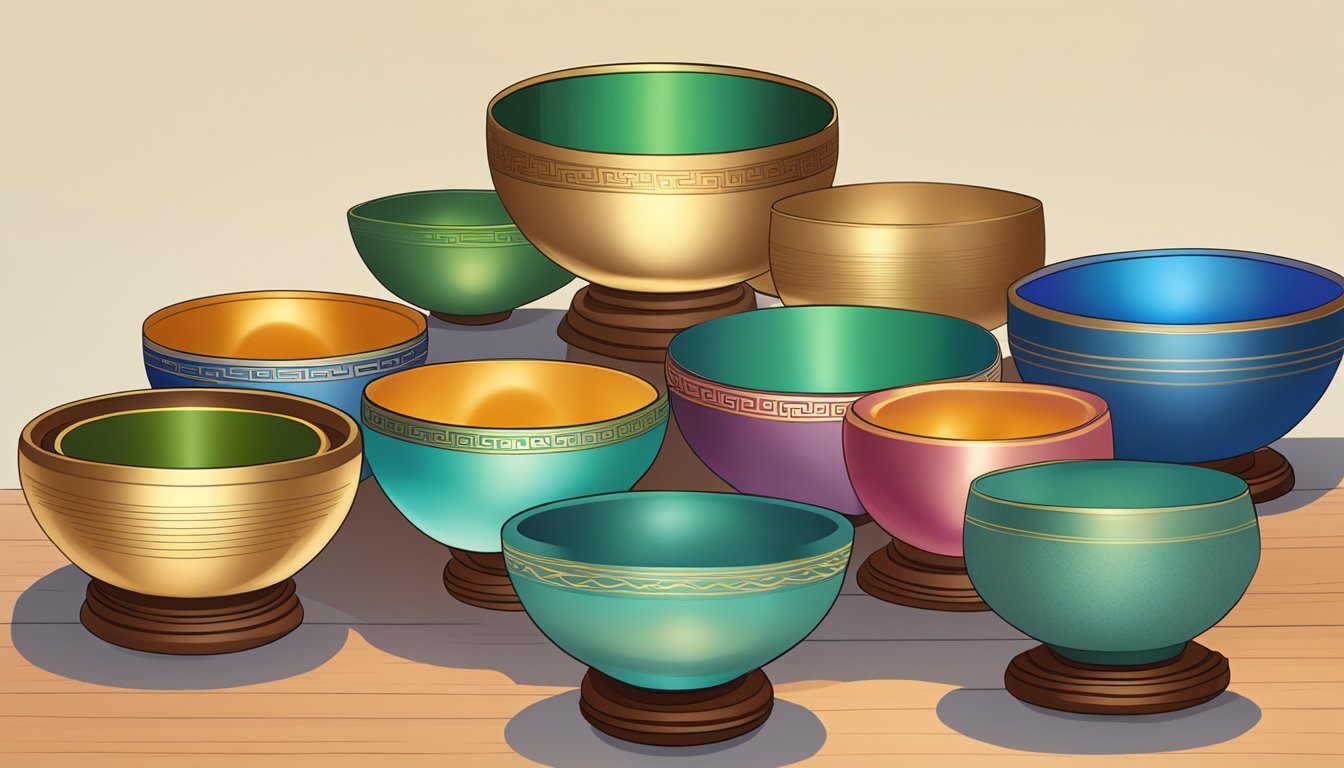
How many singing bowls do you need for a sound bath?
There’s no fixed number — some practitioners run a full sound bath with just two or three bowls, while others use a full seven-bowl chakra set. What matters more than quantity is variety in tone: a mix of lower and higher-pitched bowls gives a session more depth than several bowls tuned to similar notes.
Where can I find singing bowls near me?
If you’re looking to purchase a singing bowl, you may be able to find them at your local spiritual or holistic store, there is also a good selection on Amazon.
Alternatively, you can search online for reputable sellers. Make sure to read reviews and do your research before making a purchase.
What should I consider when choosing a singing bowl?
When choosing a singing bowl, consider the size, weight, and sound. A smaller bowl may be easier to handle for a beginner, while a larger bowl may produce a deeper sound.
You may also want to consider the material and design of the bowl, as well as the type of mallet used to play it.
What are the benefits of using a singing bowl?
Singing bowls are believed to have many benefits, including reducing stress and anxiety, promoting relaxation, and improving overall well-being.
They are also said to enhance meditation and promote a sense of inner peace.
Which type of singing bowl is best for beginners?
For beginners, a smaller size singing bowl within a size of 4.5 inch to 6 inch in diameter is recommended.
You may also want to consider purchasing a set that includes a cushion and mallet to help you get started.
How can I tell if a singing bowl is of good quality?
A good quality singing bowl should produce a clear and consistent sound when played. It should also have a smooth and even surface, with no cracks or chips.
Additionally, the bowl should feel sturdy and well-made.
What should I know before buying a singing bowl?
Before purchasing a singing bowl, it’s important to do your research and read reviews. You may also want to consider your budget and what type of sound you prefer.
Keep in mind that some singing bowls may be more expensive due to the materials used or the craftsmanship involved.
Author Profile
-
Lily spent the first fifteen years of her career as a lawyer — contracts, arguments, precedent, and not much time for anything you'd call "energy work." A stress-related injury in her late 30s sent her to a massage therapist, and something about the work stuck.
She trained as a massage therapist herself, then kept going: Reiki certification, and a slow pull into the wider world of energy-based and spiritual practice she'd probably have cross-examined a witness for mentioning a decade earlier.
Now in her 50s, Lily runs RestoreQi the way she wishes a site like it had existed when she started out — written by someone who's actually done the training and tested the products, not just repackaged what everyone else says. She's still a practicing massage therapist and Reiki practitioner, and she brings the same habit from her legal career to everything she writes here: check the evidence, and don't take a claim at face value just because it sounds ancient.
Latest entries
 Singing BowlsJune 27, 2026Best Crystal Singing Bowls (2026): Top Picks for Every Budget
- Massage TablesMay 31, 2026Best Massage Table Face Cradle (2026): Comfort, Compatibility and the Sinus Problem Nobody Fixes
- Massage TablesMay 31, 2026Best Massage Table Sheets (2026): Material, Oil Resistance and How Many Sets You Actually Need
- Massage TablesMay 31, 2026Best Massage Table Warmer (2026): The Honest Comparison Professionals Need