Best Pregnancy Massage Table (2026): The Three Options Nobody Compares
Search for “pregnancy massage table” and you’ll find two types of content: product pages that list a dedicated cutout table and move on, or health information articles about prenatal massage that don’t help you buy anything. Nobody bridges the gap — nobody explains that a dedicated pregnancy table is just one of three approaches, that it is often not the best choice, or what specifically to look for if you decide you do need one.
This guide covers all three approaches honestly, explains which clients in which trimesters benefit from each, and gives specific guidance for Reiki and energy healing practitioners whose needs differ from massage therapists in ways that matter for this decision.
2 quick questions to find the right approach.
1. What is your main practice?
Table of Contents
The Core Question: What Are You Actually Trying to Achieve?
Before choosing any equipment, clarify what position you’re trying to offer. Positioning options for pregnant clients are:
Prone (face down): Comfortable in the first trimester on a standard flat table. In the second trimester the growing belly makes prone increasingly uncomfortable without accommodation. In the third trimester prone is generally avoided entirely. If you want to offer prone positioning in the second trimester, you need either a dedicated cutout table or a pregnancy cushion system.
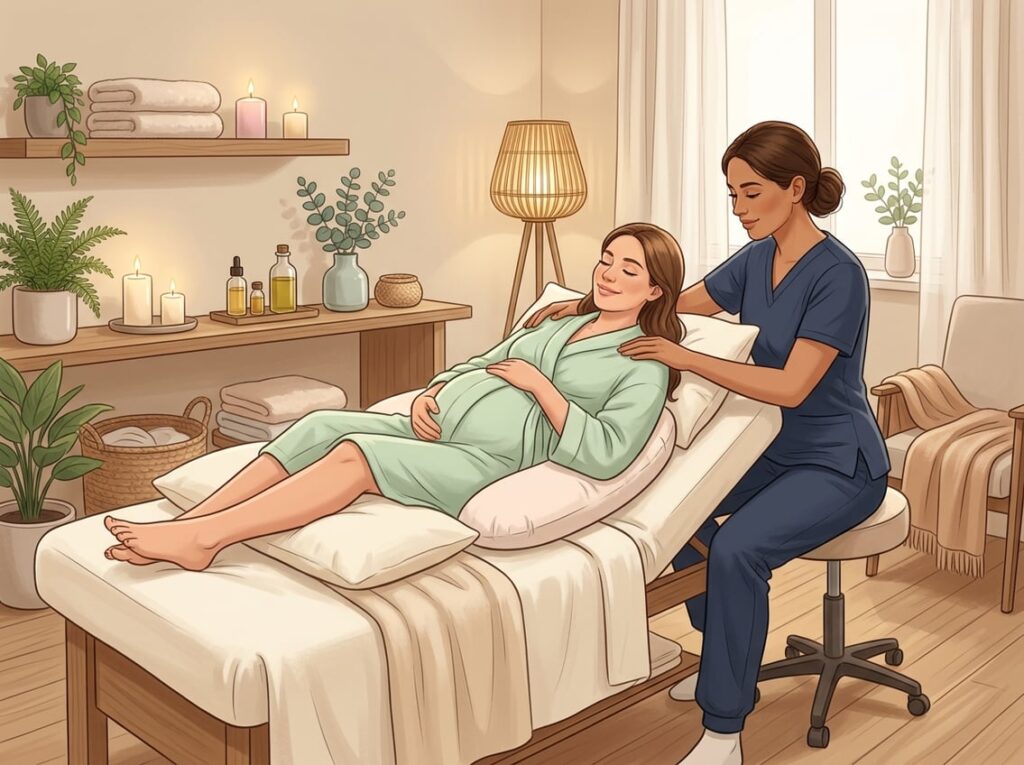
Supine (face up): Fine throughout the first and second trimester with standard bolstering. In the third trimester, lying flat on the back can compress the inferior vena cava — the large vein that returns blood from the lower body — causing dizziness and discomfort. From around 28 weeks, supine positioning for extended periods should be avoided. A semi-reclined position (propped at 30 to 45 degrees on the left side) is preferable if the client is on their back.
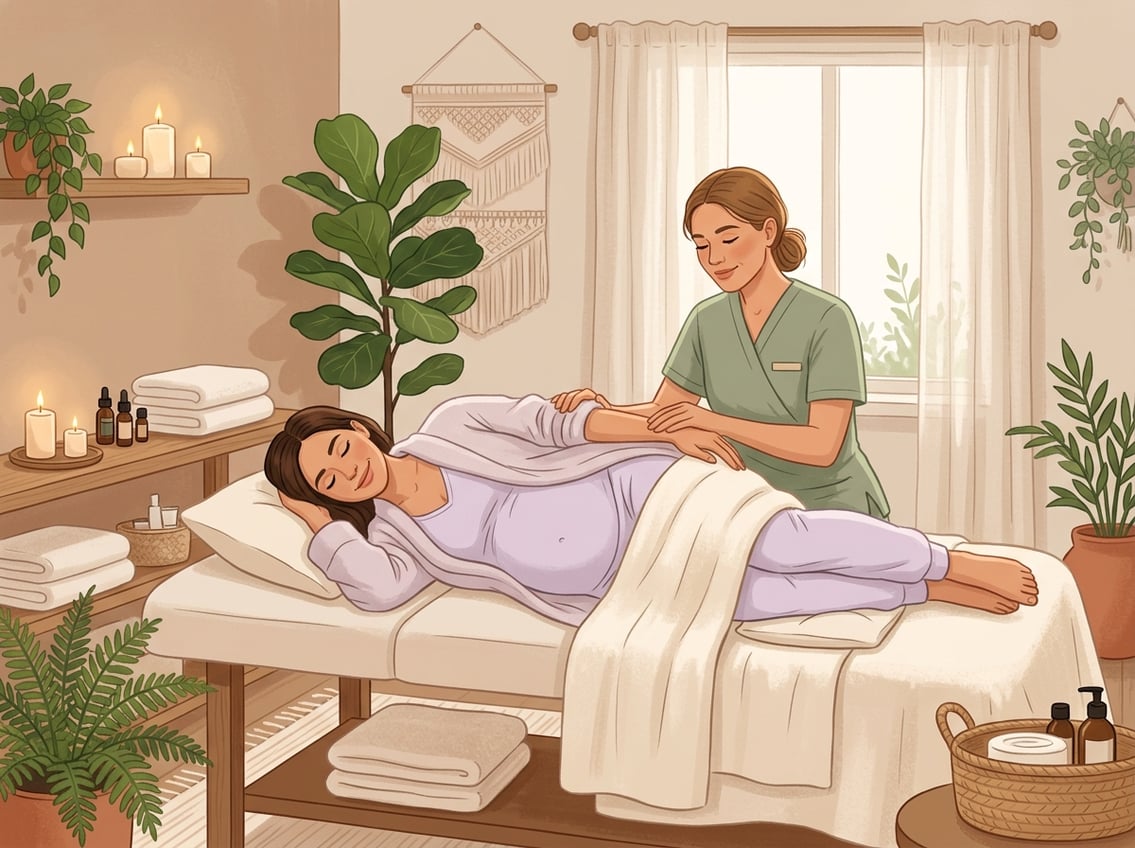
Side-lying: The standard positioning approach for prenatal massage and Reiki from the second trimester onward. Works on any standard table with appropriate bolstering. Safe, comfortable, and preferred by most prenatal specialists. Requires no specialised table equipment.
If your prenatal work is primarily side-lying — which covers most Reiki practitioners and a significant proportion of prenatal massage therapists — the sections below will help you understand that a dedicated pregnancy table is probably not what you need.
The Three Options
Option 1: A Dedicated Pregnancy Massage Table
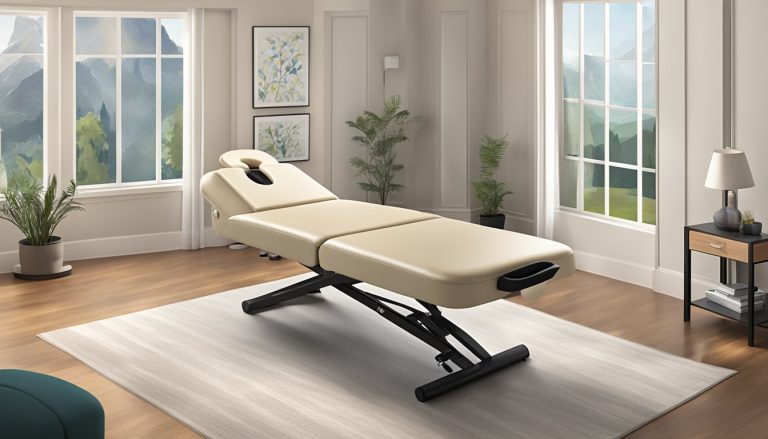
A dedicated pregnancy table has a removable or drop section in the centre of the table surface — sized and positioned to accommodate a pregnant belly — which allows the client to lie face down from mid-pregnancy. Better models also include breast relief cutouts and additional support sections. The client’s weight is distributed around the belly rather than against it.
When this is the right choice: You are a massage therapist who regularly works with pregnant clients in the second trimester and specifically wants to offer prone positioning as part of your treatment. You see enough prenatal clients to justify dedicated equipment. You perform Swedish or deep tissue work on the back, which benefits from prone access.
When it’s probably not the right choice: You are a Reiki or energy healing practitioner whose prenatal work is side-lying and semi-reclined. You see prenatal clients occasionally rather than regularly. You already own a quality standard table. The cutout feature will rarely or never be used.
Option 2: A Pregnancy Cushion System
A pregnancy cushion or pillow system is a set of specifically shaped foam sections that sit on top of a standard flat table and create a supported prone position by accommodating the belly and breast tissue in cutout sections within the cushions. The client lies on the cushion system, which does the job of a dedicated table’s cutout without requiring a different table.
When this is the right choice: You have a quality standard table you want to keep using. You want to offer prone positioning for prenatal clients without buying a new table. Your prenatal volume doesn’t justify the cost of a dedicated pregnancy table. You want something that stores compactly between uses.
The position a cushion system creates is slightly different from a built-in cutout table — the belly hangs into the cushion cutout rather than into open air. Most clients find both comfortable; some prefer the dedicated table for the feeling of more open space. For moderate prenatal volume, the cushion system is typically the better value decision.
Option 3: Side-Lying with Bolsters
No specialised table required. The client lies on their side on your standard table, supported by a full-length body pillow or purpose-made pregnancy bolsters, with additional support between the knees, under the head, and supporting the belly if needed. This is the approach used by the majority of prenatal massage and Reiki practitioners from the second trimester onward.
Side-lying is not a compromise — it is the preferred positioning approach in prenatal bodywork. It is comfortable throughout pregnancy, safe at all trimesters, avoids the vena cava compression risk of supine, and requires no specialised equipment beyond bolsters. The only thing it doesn’t offer is prone positioning.
For Reiki practitioners specifically: side-lying is almost always the right choice. Energy work with pregnant clients is predominantly performed in this position, the access you need is the same as with any standard table, and the client’s experience is fully comfortable. A dedicated pregnancy table adds nothing that matters for your practice.
Which Approach Is Right for You?
| Approach | Best For | Offers Prone? | Cost |
|---|---|---|---|
| Dedicated pregnancy table | Massage therapists with regular prenatal clients | ✅ Yes | High |
| Pregnancy cushion system | Practitioners who want prone option without a new table | ✅ Yes | Medium |
| Side-lying with bolsters | Reiki practitioners and most prenatal specialists | ❌ No | Low (bolsters only) |
2 quick questions to find the right approach.
1. What is your main practice?
Trimester-by-Trimester: What Changes and What You Need
The equipment you need — and the positions that are safe and comfortable — changes significantly across the three trimesters. Understanding this before buying anything prevents spending money on equipment that serves only part of your prenatal work.
First trimester (weeks 1–13): Most positions are comfortable on a standard flat table. Prone is typically fine. Side-lying is an option but usually unnecessary at this stage. Supine is fine. For Reiki, minimal positional modification is usually needed. Most practitioners treat first trimester clients similarly to non-pregnant clients, with awareness and communication about comfort. No specialised table equipment is needed at this stage.
Second trimester (weeks 14–27): This is where positional decisions start to matter. Prone on a flat table becomes increasingly uncomfortable as the belly grows — typically from around 16 to 20 weeks onward, though this varies significantly between individuals. If you want to continue offering prone work, this is when a pregnancy table or cushion system becomes relevant. Side-lying works well throughout this trimester and becomes the primary positioning approach for most practitioners. For Reiki, side-lying with bolster support under the head, between the knees, and supporting the belly is comfortable and appropriate. Supine with a pillow under the right hip to tilt the client slightly to the left is also used in early-to-mid second trimester.
Third trimester (weeks 28–40): Prone is generally avoided. Side-lying on the left side is the standard positioning approach — left side lying is generally preferred as it avoids pressure on the inferior vena cava and provides better circulation for mother and baby. Extended supine is avoided from around 28 weeks. Semi-reclined at 30 to 45 degrees is used when some face-up access is needed. Bolstering becomes more important as the belly is larger and the client’s centre of gravity has shifted. A full-length pregnancy bolster or body pillow supporting the belly from underneath is recommended in this trimester. No specialised table equipment is required beyond good quality bolsters for third trimester side-lying work.
Master Massage Eva — Best Dedicated Pregnancy Table on Amazon

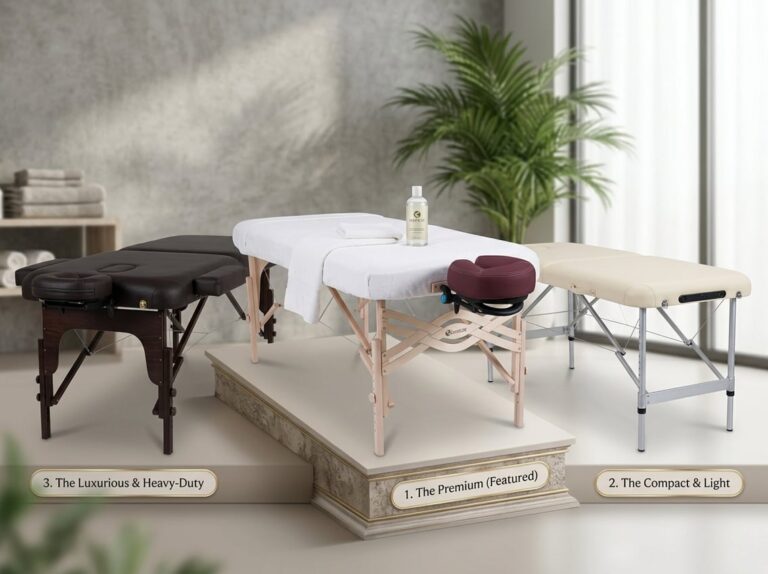
For massage therapists who have decided a dedicated pregnancy table is the right investment and need an option available through Amazon, the Master Massage Eva is the most practical choice currently listed. It features a removable belly cutout section positioned to accommodate the pregnant abdomen in prone positioning, a breast cutout, and a face cradle system providing the equipment necessary for supported prone prenatal work.
When evaluating a dedicated pregnancy table, the features that actually matter are: the size and depth of the belly cutout (does it adequately accommodate a second trimester belly — typically 10 to 12 inches wide and 4 to 6 inches deep is sufficient), the quality of the surrounding foam support, whether the insert is removable and storable (so the table functions as a standard table when not in prenatal use), and the face cradle quality for sustained prone positioning.
The Eva covers these requirements at a mid-range price point accessible to practitioners who don’t want to spend premium prices on a specialised table. It is not a professional-grade table in the Earthlite or Oakworks sense — build quality and longevity reflect the price point — but for practitioners seeing prenatal clients regularly at moderate volume it performs its function.
One practical note: the belly cutout insert, when removed, leaves an opening in the table surface — check that the standard insert fully fills this and sits flush when in use for non-pregnant clients. This is a common quality variable across pregnancy table designs.
Best for: Massage therapists seeing regular second trimester prenatal clients who want prone positioning capability in a dedicated table available through Amazon.
Pregnancy Massage Cushion System — Best for Most Practitioners
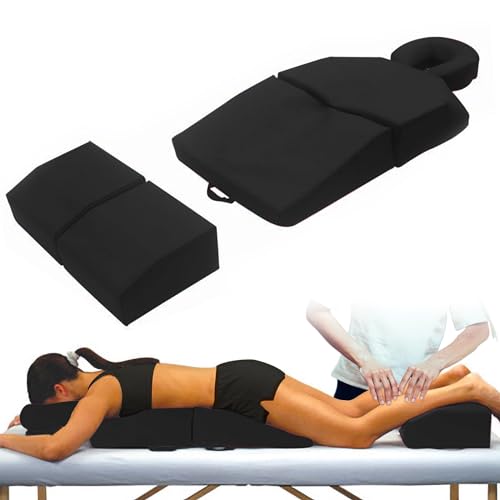
For practitioners who have a quality standard table and see prenatal clients occasionally rather than as a specialism, a pregnancy cushion system is almost always the more sensible purchase. It sits over your existing table, creates a supported prone position using shaped foam sections with belly and breast cutouts, costs substantially less than a new table, and stores in a bag when not in use.
The prone position a cushion system creates is slightly different from a dedicated cutout table. With a cutout table the belly hangs into open space. With a cushion system the belly rests gently into a foam cutout. Both are comfortable for most clients, but clients who have used both sometimes prefer the open-space feeling of a dedicated table. For practitioners whose prenatal volume doesn’t justify a dedicated table, this distinction rarely matters in practice.
When choosing a pregnancy cushion system, look for: adequate belly cutout dimensions for second trimester use, a chest section that supports properly without creating pressure points, a face section that aligns with your existing face cradle or works independently, and materials that wipe clean easily between clients.
Best for: Practitioners with an existing table who want to offer prone positioning for prenatal clients occasionally. The right choice for most non-specialist practitioners, and specifically recommended for Reiki practitioners who primarily work in side-lying.
Reiki with Pregnant Clients: Positioning That Works and What Equipment You Actually Need
Reiki is generally considered safe throughout pregnancy — it involves no physical manipulation, pressure, or deep tissue work. The positioning considerations are about client comfort during a 60 to 90 minute session, not about technique requirements.
For Reiki specifically, the equipment you need is simpler than most guides suggest:
A quality standard table. Any of the tables discussed across the rest of the restoreqi site will work for side-lying prenatal Reiki. A wider table (30 inches) gives more surface area for a side-lying client but the minimum 28 inches works. See: Best Reiki Table for Home Use.
A full-length body pillow or bolster. This is the most important single piece of equipment for prenatal Reiki. A pregnant client lying on their side needs support under the head, between the knees, and ideally supporting the belly from below. A full-length body pillow handles all three if positioned correctly. Purpose-made pregnancy bolsters are also available and slightly easier to position consistently.
An adjustable-height table. Pregnant clients, particularly in the third trimester, may have more difficulty getting on and off the table. A table at its lowest height — or an electric lift table that can descend to 18 inches — makes this significantly easier. See: Best Electric Massage Table.
A light blanket. Pregnant clients often feel temperature changes more acutely and may feel cooler or warmer than expected during a session. Have both a light blanket and a fan available.
The specific positioning for side-lying prenatal Reiki: left side lying where possible, head supported at neutral (not tilted up or down), a folded towel or small bolster between the knees to reduce strain on the hip and lower back, belly supported from below with a folded blanket or bolster in the third trimester. Ask the client to tell you when they want to reposition — most will shift sides at some point in the session, particularly in the third trimester when one side becomes uncomfortable.
For the treatment room setup around prenatal sessions, see: How to Set Up a Reiki Treatment Room.
Frequently Asked Questions
Do I need a special table for prenatal massage?
Only if you want to offer prone (face-down) positioning in the second trimester. For side-lying work — which is the standard approach from mid-pregnancy and the primary position used by most prenatal specialists and all Reiki practitioners — a quality standard table with appropriate bolstering is entirely adequate. Save the money on a dedicated table unless prone positioning is genuinely part of your treatment offering.
Is Reiki safe during pregnancy?
Reiki is generally considered safe throughout pregnancy. It involves no physical manipulation, pressure, or deep tissue work — only gentle laying on of hands or hands-off energy work near the body. Most practitioners treat pregnant clients across all three trimesters with appropriate positional modifications. Clients with complicated pregnancies or specific medical concerns should consult their midwife or obstetrician before receiving any bodywork, including Reiki.
What position should pregnant clients be in during Reiki?
Side-lying on the left side from the second trimester onward is the standard approach. Semi-reclined (propped at 30 to 45 degrees) also works well and is used by many practitioners in later pregnancy. Extended prone on a flat table is avoided from mid-pregnancy without a pregnancy cushion system or dedicated table. Extended flat supine is avoided from around 28 weeks. Ask clients to communicate when they are uncomfortable and always be prepared to help them reposition.
What’s the difference between a pregnancy table and a pregnancy cushion system?
A pregnancy table has a built-in removable cutout in the table surface itself, with the belly hanging into open air below. A pregnancy cushion system sits on top of any standard table, with the belly resting into a foam cutout section within the cushions. Both allow prone positioning. The dedicated table provides a slightly more open belly space and is the better option for high-volume specialist prenatal practice. The cushion system adapts any existing table, costs less, stores easily, and is the better choice for practitioners who are not prenatal specialists.
From what trimester should a client stop lying face down?
This varies by individual, but prone positioning on a flat table typically becomes uncomfortable from around 16 to 20 weeks — often earlier for clients with a larger build or those carrying multiple pregnancies. If prone positioning is part of your practice, introduce a pregnancy cushion system or dedicated table from the second trimester rather than waiting for the client to report discomfort. First trimester prone on a standard flat table is generally fine.
Also see: Best Massage Table for Home Use | Best Reiki Table for Home Use | Reiki Table Accessories | How to Set Up a Reiki Treatment Room
Author Profile
-
Lily spent the first fifteen years of her career as a lawyer — contracts, arguments, precedent, and not much time for anything you'd call "energy work." A stress-related injury in her late 30s sent her to a massage therapist, and something about the work stuck.
She trained as a massage therapist herself, then kept going: Reiki certification, and a slow pull into the wider world of energy-based and spiritual practice she'd probably have cross-examined a witness for mentioning a decade earlier.
Now in her 50s, Lily runs RestoreQi the way she wishes a site like it had existed when she started out — written by someone who's actually done the training and tested the products, not just repackaged what everyone else says. She's still a practicing massage therapist and Reiki practitioner, and she brings the same habit from her legal career to everything she writes here: check the evidence, and don't take a claim at face value just because it sounds ancient.
Latest entries
 Singing BowlsJune 27, 2026Best Crystal Singing Bowls (2026): Top Picks for Every Budget
- Massage TablesMay 31, 2026Best Massage Table Face Cradle (2026): Comfort, Compatibility and the Sinus Problem Nobody Fixes
- Massage TablesMay 31, 2026Best Massage Table Sheets (2026): Material, Oil Resistance and How Many Sets You Actually Need
- Massage TablesMay 31, 2026Best Massage Table Warmer (2026): The Honest Comparison Professionals Need